A growing body of research confirms what All Home has built our model around: temporary, flexible financial assistance, targeted to households at the highest risk, can keep a family from being pushed into homelessness before it starts. Now, a new report from the California Policy Lab gives us the clearest picture yet of how that model is working across the Bay Area.
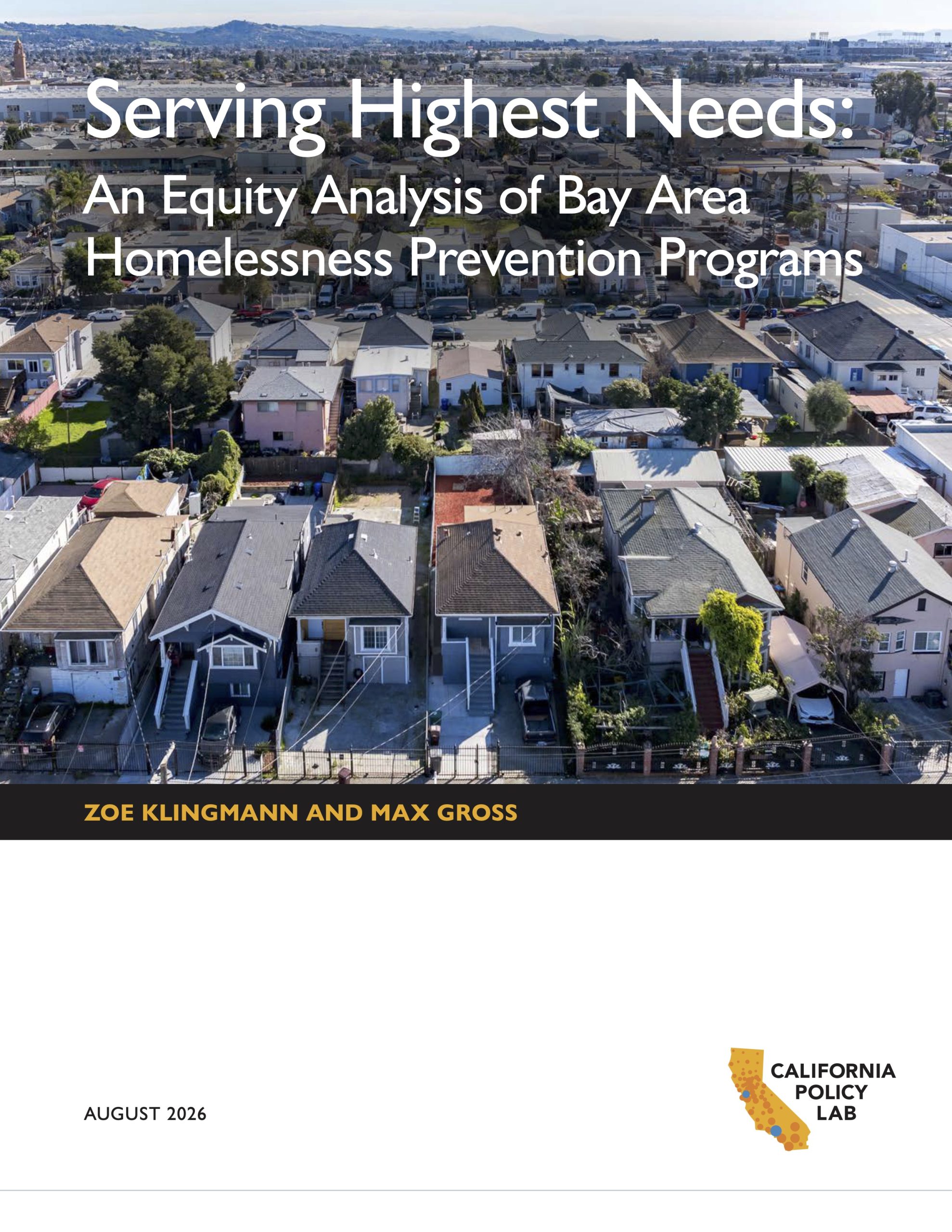
In 2021, All Home partnered with Bay Area Community Services (BACS) to launch the Homelessness Prevention Platform (HPP), an online tool that connects at-risk households with flexible financial assistance—rent, utilities, and other support—before they lose their housing. The new California Policy Lab report analyzed close to 55,000 applications submitted to the HPP between May 2021 and July 2025 across six Bay Area jurisdictions: Oakland, San Francisco, and Contra Costa, Napa, Solano, and Sonoma counties. The findings show a program reaching the populations we know are at the highest risks of homelessness, and shares opportunities for continual program improvement.
What the research found:
- The program is reaching people in real crisis. Applicants are deeply cost-burdened: more than 8 in 10 have incomes under 30% of the area median income, and a majority spend more than half their income on housing. Nearly half have experienced homelessness before.
- Prioritization is working as intended. Of all applications, 61% met the criteria to be prioritized—either through a risk score or a recent experience of homelessness—and more than half of those prioritized went on to receive flexible, temporary financial assistance.
- The program is reaching communities at elevated risk. Compared to the broader population of low-income, rent-burdened renters in the same jurisdictions, applicants are more likely to identify as Black and to be working-age adults. Black applicants, young adults transitioning out of foster care or other systems (Transition-Aged Youth), and households with children are all more likely to be prioritized—groups the research suggests face elevated homelessness risk that isn’t always captured by income and rent data alone.
- Women and families are showing up for help. More than half of applicants are women, and applicants are more likely to have children in their household than the broader population of vulnerable renters.
This research helps us understand how effectively the prevention programs we support are reaching people with the greatest needs before they experience homelessness—and where we can continue to improve our systems to have the greatest impact.
These findings are the first piece of a broader, multi-phase evaluation of the Bay Area’s regional prevention model. A second phase, already underway, will dig into the causal impact of these programs on reducing the risk of homelessness for participants.
Read the full policy brief and in-depth report to learn more.
Questions about this research? Contact Zoe Klingmann at [email protected]. Questions about All Home’s prevention work? Contact Irene Farnsworth at [email protected].
