We can stop homelessness before it happens. Effective prevention strategies use the latest research to target emergency financial assistance, housing stabilization services, and legal services to the people most likely to experience homelessness (“targeted prevention”).
All Home is advancing a regional strategy and targeted program model so that people at risk of homelessness can quickly and consistently get the support they need to stay housed across the Bay Area. We aim to keep people in their homes, reduce the number of people being pushed into homelessness, and redress racial disparities in who becomes homeless.
NEWS:
- California has passed AB 1924, creating a first ever statewide prevention strategy. Read more
- Keep People Housed-Marin launched October 2026. Learn more.
The Need for a Regional Strategy
Across the Bay Area, people are becoming homeless faster than they are being housed by homeless response systems. Sky-rocketing rents, an under-production of affordable housing, extreme income inequality, low-paying jobs, and a fraying social safety net are driving homelessness. As long as more people are being pushed into homelessness than housed, the problem will get worse and more of our neighbors will suffer the harmful effects. This is why preventing homelessness is critical to ending it.
When All Home started, there was no regional consensus on what homelessness prevention meant. Most cities and counties weren’t targeting their limited resources to the people most at risk of ending up on the street, and many programs still served clients first-come, first-served, relying on eligibility criteria rather than evidence.
Targeting Works: The Evidence
All Home set out to build consensus around a more strategic, targeted approach. We started with promising examples from the field, where early adopters of the targeted prevention program model were distributing their resources to high-risk households with great results:
- Santa Clara County: Destination: Home’s Homelessness Prevention System (HPS) has helped reduce the number of families becoming homeless by 20% over the past 5 years. The average household only requiring around $7,000 in financial assistance.
- City of Oakland: Keep People Housed—Oakland (KPH), launched by Bay Area Community Services (BACS), has served more than 7,700 high-risk households, with a 92-93% housing retention rate.
Hear from Oakland participants.
Building a Regional Prevention System
Shared Technology
In 2021, we partnered with Bay Area Community Services to launch the Homelessness Prevention Platform (HPP), which helps counties adopt the same evidence-based approach. It includes an online application in multiple languages, an assessment tool developed with researchers and practitioners that scores applications based on risk factors (e.g., previous experience of homelessness, loss of income, household composition, etc.), and a secure database where providers verify applications and target flexible financial assistance and services to high-scoring households. Because counties share a secure, but identical platform, we are building a regional dataset that tracks outcomes, by county, city, and region, including the ability to disaggregate by race.
Programs Across the Region
All Home’s Regional Action Plan (the RAP) calls for investments in interim and permanent housing as well as targeted prevention to keep people in their homes. We helped fund, launch, and expand program pilots into a first-of-its-kind regional system, operating in in:
- San Francisco’s Emergency Rental Assistance Program (SF-ERAP)
- Keep People Housed – Oakland
- Keep People Housed – Contra Costa
- Keep People Housed – Solano
- Keep People Housed – Sonoma
- Keep People Housed – Marin
To date, our pilots and programs have targeted assistance to over 30,000 households. The model pairs flexible financial assistance with housing-focused services and legal referrals for households facing eviction, and we are piloting a linked workforce development program, Homes and Jobs Connect.
We build the system through technical assistance, a pooled prevention fund (including grants to accelerate and sustain programs), offering options for shared technology, and regular convenings so counties learn from one another. A significant share of each budget goes directly to people in need.
Research on Homelessness Prevention in the Bay Area
A 2026 report from the California Policy Lab analyzed close to 55,000 Homelessness Prevention online applicants between May 2021 and July 2025 across Oakland, San Francisco, and Contra Costa, Napa, Solano, and Sonoma counties.
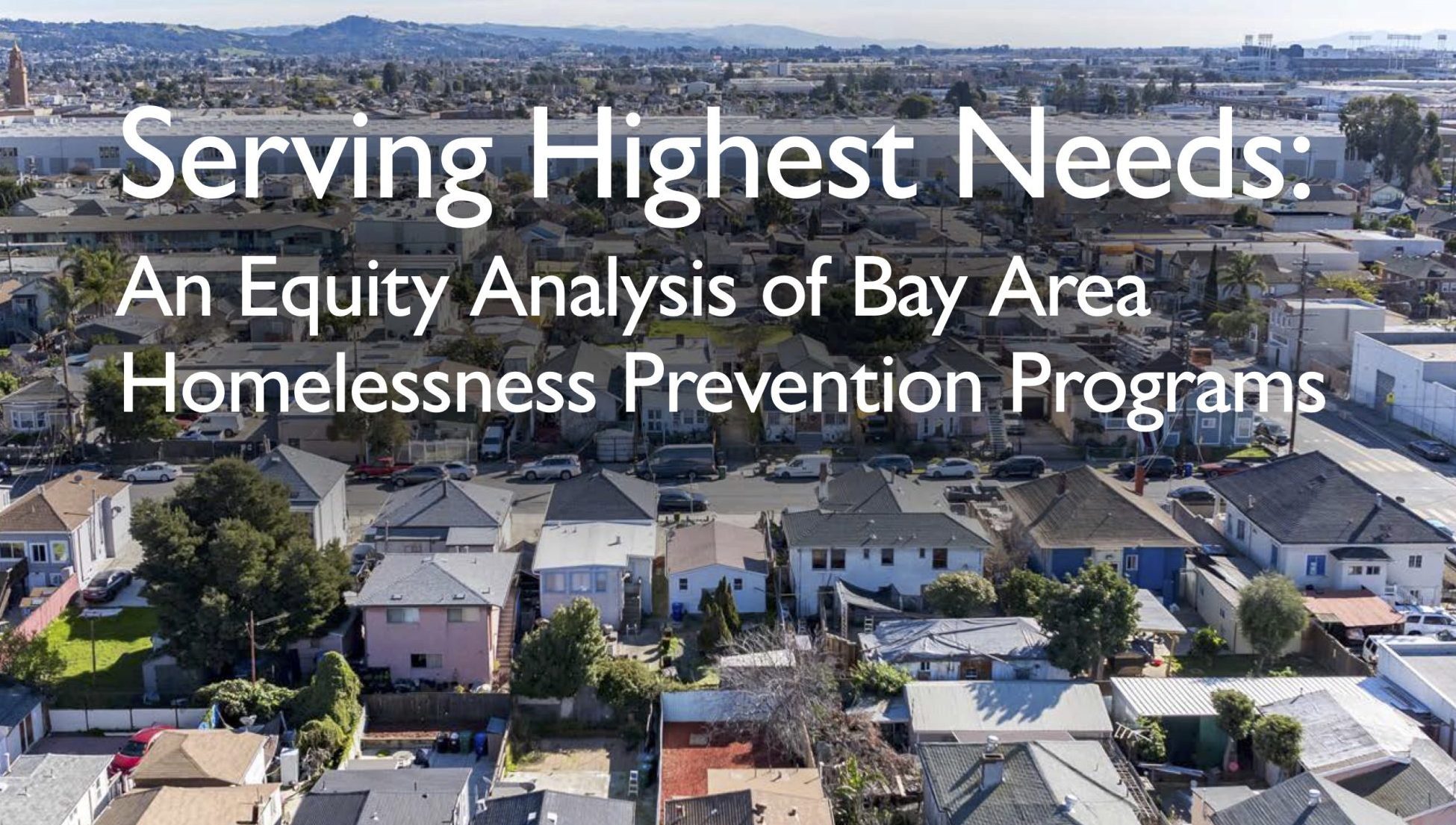
- Reaching people in real crisis: More than 8 in 10 applicants have incomes under 30% of area median income, and nearly half have experienced homelessness before.
- Prioritization is working: 61% of applicants met the criteria to be prioritized, and more than half of those received financial assistance.
- Reaching communities at elevated risk: Black applicants, Transition-Aged Foster Youth, and households with children are more likely to be prioritized.
- Women and families: More than half of applicants are women, and applicants are more likely to have children than other vulnerable renters.
This is the first phase of a multi-phase evaluation. A second phase, to be completed in 2027, will examine the impact of these programs on reducing homelessness risk.
Preventing Youth Homelessness in San Francisco
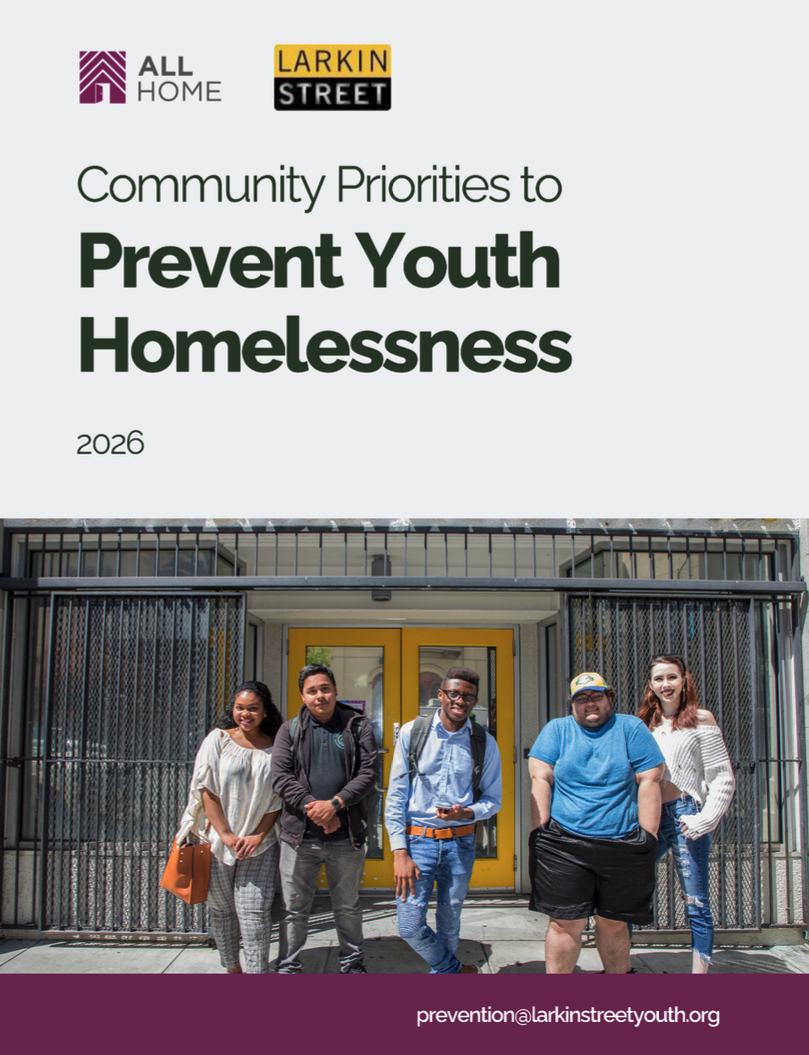
San Francisco lacks a unified, proactive system to identify and prevent youth homelessness. Larkin Street Youth Services, All Home, young people with lived experience, and partners across the city created the Community Priorities to Prevent Youth Homelessness, with the goal of a coordinated, citywide system by 2030. It rests on four pillars:
- Proactive identification of youth at risk
- Evidence-based prioritization based on risk factors unique to youth
- Flexible, direct financial assistance
- Integration across youth-serving systems
Scaling and Sustaining Prevention
CA Passed AB 1924: A First-Ever Statewide Prevention Strategy
In 2026, Governor Newsom signed AB 1924, authored by Assemblymember Jesse Gabriel, co-sponsored by All Home, Destination: Home, and Inner City Law Center. The bill directed the state to create its first-ever statewide homelessness prevention strategy by July 1, 2028 and it passed with overwhelming bipartisan support. It is a critical step toward stopping homelessness before it starts.
Funding Prevention for the Long Term
The need for homelessness prevention far exceeds the current resources available. To avoid the trauma caused by experiencing homelessness and the linger impacts requires stable, long-term funding at the necessary scale.. We are working to:
- Secure local and philanthropic support for stable programs in every county
- Win local and regional ballot measures that can fund targeted prevention
- Build on AB 1924 by helping design and implement the state’s new prevention strategy and advocating for a permanent state funding source
Our goal is permanent statewide funding for prevention, a Bay Area revenue source for housing and homelessness that includes prevention, and unified, evidence-based models operating in every Bay Area county. If we achieve the appropriate scale, we expect to see fewer people entering or returning to homelessness and less demand for shelter and crisis services. In the meantime we will keep learning, working to expand these life-altering programs, and evaluating to inform constant improvement and more consistent coordination across cities and counties..
