Behind every Catalyst-funded project is a community working to build a stronger, more resilient Bay Area economy. From the region’s 10 awarded projects, we’re sharing the stories of the people, partnerships, and places driving this work forward.
Explore how these pre-development investments are laying the groundwork for quality jobs, climate resilience, and economic opportunity across the Bay Area’s nine counties.
Anchoring Worker Cooperative Hubs
Antonio from SOMOS Mayfair sits down with Lupe Perez, co-founder of Colores Collective, to discuss how worker-owned cooperatives create pathways to economic mobility, community wealth, and worker power. Through the Worker Cooperative Hubs initiative, SOMOS Mayfair is building infrastructure that expands access to cooperative development, leadership training, capital, labor rights education, and climate resilience resources for workers historically excluded from traditional economic opportunities. Grounded in equity and democratic ownership, this work supports a just transition toward a regenerative economy where workers and communities thrive together.
Watch the video and learn more.
Bay Area High-Road Manufacturing Initiative
Kate, Andre, and Caitlyn share their experiences with the Bay Area High-Road Manufacturing Initiative, which is building a regional manufacturing ecosystem rooted in job quality, equity, sustainability, and climate resilience. Through research, regional planning, and pilot projects across Alameda, Contra Costa, San Mateo, Santa Clara, and Solano Counties, the initiative brings together employers, labor unions, and community partners to test new workforce strategies, strengthen career pathways, and support the future of green battery manufacturing in the Bay Area. By investing in high-road partnerships and equitable workforce development, the initiative helps grow a manufacturing sector that works for workers, communities, and California’s climate goals.
Watch the video and learn more.
Catalyzing Quality Careers in Building Decarbonization
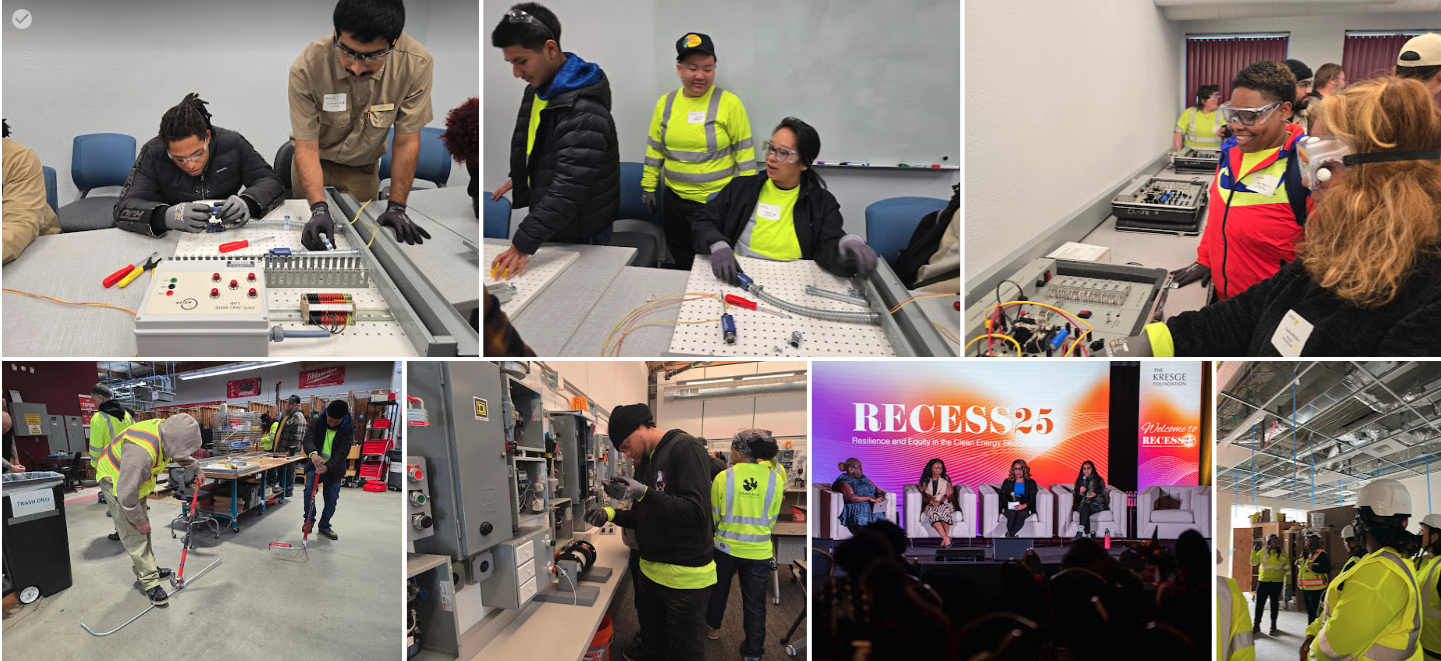
The photo gallery captures participants training for careers in residential building decarbonization. Many identify as women, non-binary, youth, or people impacted by the justice system—groups currently underrepresented in the clean energy industry. Through Rising Sun’s Opportunity Build pre-apprenticeship program and the High Road Training Partnership in Residential Building Decarbonization, the project pilots a specialized decarbonization curriculum for job seekers of color while helping small, BIPOC, and women-owned contracting businesses meet job quality standards in the growing electrification and energy efficiency sector. By building a skilled, diverse workforce and supporting contractors who provide family-sustaining jobs, the project grows High Road green jobs and advances economic justice alongside California’s climate goals.
View the photo gallery and learn more.
Indigenous and Immigrant Farm Workers Building a Climate Resilience Workforce
The video brings to life the fuel reduction and vegetation management certification trainings offered by the Indigenous and Immigrant Farm Workers Building a Climate Resilience Workforce project. Led by North Bay Jobs with Justice, the trainings are informed by Southern and Northern Indigenous land stewards’ expertise in treating and tending to land with fire, and — thanks to a growing number of Spanish-speaking graduates now serving as Instructor Aids — are now offered in Spanish as well as English. Rooted in traditional ecological knowledge, this work builds a bilingual, community-led workforce equipped to steward land and reduce wildfire risk.
Watch the video and learn more.
High Road Clean Transportation Career Pathway
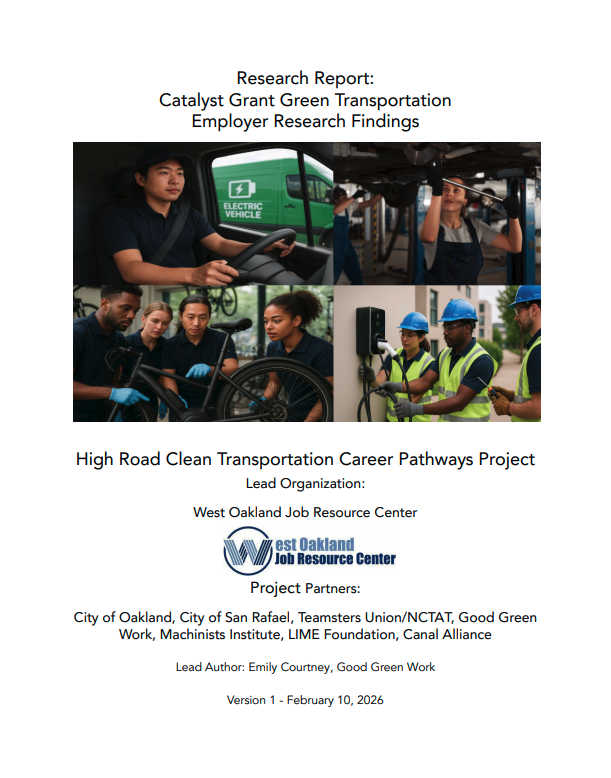
The blog post shares research from the High Road Clean Transportation Career Pathways Project on transportation jobs and training needs in Oakland and San Rafael, where transportation produces more than 60% of local greenhouse gas emissions. Led by the West Oakland Job Resource Center, the project surveyed more than 20 local employers to identify skill gaps and job quality across the automotive, transit, and heavy-duty vehicle sectors. Findings will shape pilot training programs launching this spring, building accessible, replicable pathways into High Road clean transportation careers across the Bay Area.
Read the blog post and learn more.
High Road to Early Childhood Education Consortium
The video introduces the High Road to Early Childhood Education Consortium and its work building a multi-county coalition to strengthen childcare across Santa Clara, San Mateo, Alameda, and Contra Costa counties. Centering the experience of family, friend, and neighbor caregivers, family child care home providers, and center-based educators, the consortium works to improve access, job quality, climate resilience, and career mobility for a workforce that is largely women and BIPOC and has long been underpaid and under-supported. The project launched a website with resources like a landscape analysis and funding matrix, and is working to shape the systems and policies the region needs to support a stronger, more resilient childcare ecosystem.
Watch the video and learn more.
Providing High-Road Jobs to Latina Women Serving Their Community
The video honors the work of promotoras — community health workers who have long been the heartbeat of care and trust in underserved neighborhoods — and the shift to formalize this work through a worker-owned cooperative. Led by UpValley Family Centers of Napa County, the project is developing and incubating a cooperative that gives Latina immigrant women in the rural Napa Valley region equitable compensation, job security, and ownership over their future. Through shared governance and shared prosperity, the project transforms undervalued, informal labor into a high-road career path rooted in dignity and collective strength.
Watch the video and learn more.
Regenerative Jobs Program
The blog post shares early results from the Regenerative Jobs Program, a partnership between REAP Climate Center and Greenbelt Alliance training workers for careers in composting and biochar. Nearly 180 people applied for the program’s first 40-person cohort, with the majority coming from communities historically excluded from economic and environmental opportunities, including low-income, BIPOC, veteran, and formerly incarcerated populations. Alongside technical training in regenerative practices, the program offers professional development and job coaching designed to close the gap between entry-level job seekers and industries facing growing hiring needs, building a pipeline toward quality jobs that support both workers and the environment.
Read the blog post and learn more.
The East Contra Costa Healthy Homes Collaborative
The new video features residents of Contra Costa County speaking to what a healthy home means in a community surrounded by refineries, wildfire smoke, and air quality challenges — and why building electrification matters for families managing conditions like asthma. Led by Richmond Community Foundation alongside a broad coalition of local partners, the East Contra Costa Healthy Homes Collaborative uses a whole-home, direct-install approach to electrification that strengthens health, safety, and climate resilience while creating high-road job pathways for BIPOC residents in the region. Grounded in community-led organizing, the project is building the environmental justice infrastructure this refinery-corridor region has long lacked.
Watch the video and learn more.
Trades Women, Inc. High School Girls Construction Camp
The slide deck introduces the High School Girls Construction Camp, a multi-day, hands-on training experience designed to help 11th and 12th grade girls see themselves in skilled construction careers. Led by Trades Women, Inc., the program moved from a wider set of smaller cohorts to fewer, larger ones, allowing more students per session to access real-world experiences, diverse role models, and hands-on skill building without compromising quality. By reinforcing that construction is a respected, intentional career choice rather than a fallback, the program builds the confidence and awareness young women need to pursue well-paying, skilled trades careers.
